
An upright fridge and an undercounter refrigerator solve different storage problems. Uprights can organise reserve stock, while counters put chilled ingredients near preparation work. For a Dubai kitchen, compare usable volume, container format and the installed workspace before deciding which arrangement fits each station.
Place storage where it supports the task
Map deliveries, bulk storage, preparation and service. An upright near the store can reduce the need to use working counters for reserve stock. A refrigerated counter can support frequently accessed ingredients at a preparation station. Neither layout removes the need for correct food segregation and temperature monitoring.
Use net volume and the real container layout
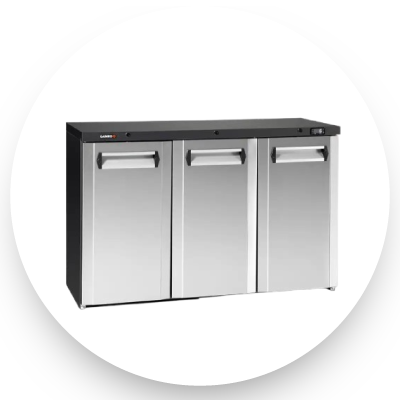
Gross litres describe the cabinet, not necessarily the space available for food. The listed Premier K 60 has 335 L usable volume and Euronorm 400 × 600 mm shelves, while RTWH177MS4-GN lists 408 L net with GN 1/1 shelves across three doors. Check your containers rather than comparing litres alone.
Check installed height and ventilation
A cabinet height may exclude legs; a counter dimension may already include castors. Verify the dimension drawing, door or drawer movement, worktop height and ventilation clearances. Keep heat-producing appliances and the expected local ambient conditions in the installation discussion, using the selected unit's climate rating.
Quote each station with a clear role
Give Excel Kitchen the food type, target storage setpoint, container dimensions and available footprint. Ask for the exact upright and counter codes, shelving, support arrangement and installation scope. A combined layout may serve the kitchen better than choosing every unit from the same cabinet family.